PNRR Closed on 31 August. Romania's Final Payment Request Goes In This Month, and Energy Capital Now Runs Through a Single Pipe
PNRR closed on 31 August. What it changes for Romanian energy projects, why the Modernisation Fund is now the default route and how to model capex.
What the end of the Recovery and Resilience Facility changes for Romania PNRR deadline energy projects, why Modernisation Fund Romania energy funding is now the default route, and how sponsors, infrastructure funds and EPCs should model grant dependent capex into 2027.
The deadline that does not move
On 31 August 2026 the Recovery and Resilience Facility stopped being a live construction instrument. Every milestone and target had to be completed by that date. Work carried out after it cannot be counted towards a positive assessment, which is a different and much harder rule than the deadlines most EU programmes run on.
What follows is a compressed administrative sequence. Member states have until 30 September 2026 to file their final payment requests with supporting evidence. The Commission issues preliminary assessments by 20 November, the Economic and Financial Committee gives its opinion by 8 December, payments are authorised by 18 December, and all disbursements close by 31 December 2026. There are no RRF payments in 2027. The facility’s total envelope was around 575 billion euros, roughly 360 billion in grants and 215 billion in committed loans.
For anyone modelling Romanian energy capex, that calendar is the single most important thing on the page. The money does not roll over.
Where Romania actually landed
Romania’s final plan revision brought the PNRR to about 20.1 billion euros, 13.57 billion in grants and 6.54 billion in loans, a cut of roughly 1.2 billion from the previous version. By 12 August 2026 the country had received 12.97 billion euros.
Payment request number five went to Brussels on 16 August 2026, worth 2.84 billion euros and covering 75 milestones and targets across 21 reforms and 54 investments. At filing, grant absorption stood at 78 percent, up from 47 percent a year earlier.
The sixth and final request is this month’s event. The Ministry of Investments and European Projects collects reports from the 20 reform and investment coordinators by 15 September 2026, then files. Preliminary absorption is estimated at over 90 percent for grants and over 95 percent for loans.
Treat that estimate as a claim, not a settlement. The Commission’s reduction procedure, not the suspension and remedy procedure that applied before the deadline, is what runs from here to December. Countries get two months to submit observations, but they cannot do corrective work after 31 August to fix an incomplete milestone. The gap between “submitted” and “paid” is where the last few hundred million euros of Romanian absorption will actually be decided.
The energy chapter outperformed, with one exception
The headline story of PNRR in Romania has been unfinished hospitals and motorways. The energy component reads very differently.
Wind and solar. Around 8,057 MW installed by 20 August 2026, against a target of 7,408 MW from a 4,408 MW baseline. The target was beaten by roughly 650 MW.
Contracts for Difference. 4,544.82 MW contracted across 75 signed contracts, 2,630.48 MW of wind across 41 contracts and 1,914.34 MW of solar across 34, against a 3,500 MW target. Delivery runs out to 2030, so these are contracted megawatts, not connected ones. The third CfD round, launched as a wind-only tender, awarded 315.8 MW of onshore wind, which tells you where the state now wants contracted capacity to sit.
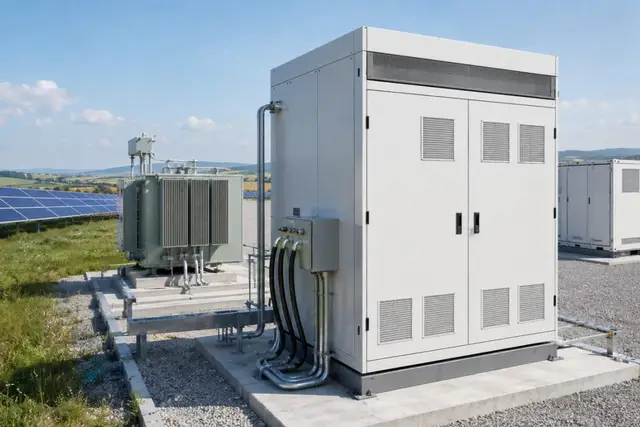
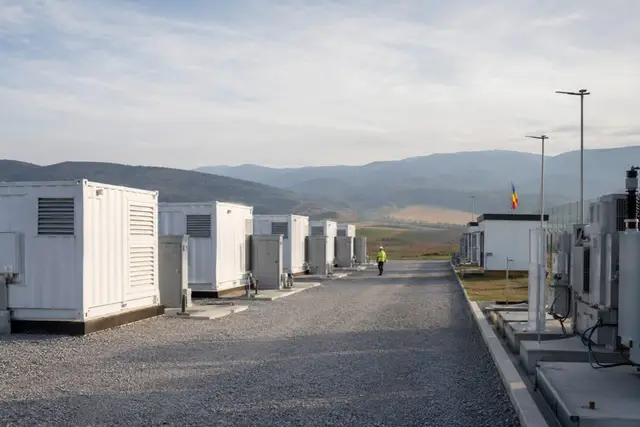
Storage. 310 MW and 620 MWh commissioned against a 240 MW and 480 MWh target, delivered by a very small number of assets: Aukera at Gura Ialomiței (150 MW / 300 MWh), Energy Capital Group at Iaz (100 MW / 200 MWh), Teiuș Solar (60 MW / 120 MWh) and Renovatio at Toplița (30.6 MW / 60.96 MWh). Four projects cleared a national target. That is a concentration risk and an opportunity in the same sentence.
Coal. This is the exception. The 710 MW retirement step ran into a drought-driven adequacy squeeze that pulled reserve capacity back onto the system, including Rovinari unit 4 at around 330 MW returning on 17 August. The penalty weighting attached to the coal milestone was reduced tenfold, from 5 to 0.5. That is a negotiated outcome, and it is a useful read on how Bucharest and Brussels are treating security of supply against decarbonisation sequencing.
What happens to work that did not finish
Roughly 4,500 projects had not been formally received by the deadline. Three mechanisms are absorbing them, and all three matter to anyone holding construction risk.
- Phasing into other EU programmes. The Cluj to Oradea and Timișoara to Lugoj rail projects move into the Transport Programme.
- National budget takeover. The 77 km Bacău to Pașcani section of the A7 motorway is now financed from the state budget.
- Exceptional partial acceptance. Law 141/2026 allows formal acceptance where remaining work is 5 percent or less of contract value.
In energy specifically, the government reinstated nine previously suspended PNRR financing contracts worth over 1.4 billion lei in total investment, of which 373.3 million lei is PNRR money (134.3 million in grants, 239 million in loans). The list includes a 130 MW photovoltaic park at Giurgiu and a 1,500 MWh per year panel manufacturing plant at Bârlad, alongside further renewable generation and green hydrogen projects.
The transferable lesson is not the list. It is that a Romanian energy grant can be suspended, reinstated, re-timed or moved to a different budget line mid-build, and the equity carries the schedule either way.
Why capital now runs through one pipe
Through 2027, the Modernisation Fund is the dominant source of grant capital for Romanian energy assets. It is not literally the only one. The Innovation Fund, CEF Energy, the Just Transition Programme until 2027, EIB lending, InvestEU guarantees and nationally recycled ETS receipts are all live. But on volume, cadence and sector fit, nothing else is close.
The scale is the point. Romania is the fund’s largest single beneficiary, with 6.77 billion euros drawn by the end of 2025 out of 20.7 billion distributed across all beneficiary states in the fund’s first five years. Romania’s allocation breaks down as roughly 1.6 billion euros to grids, which is about 76 percent of everything the fund has put into grid infrastructure across the EU, 1.6 billion to energy efficiency, 1.3 billion to renewables and 891 million to gas.
In the July 2026 round the fund disbursed 2.5 billion euros across 51 projects in 11 member states. Romania took 636.9 million of it, the largest country line in the round, ahead of Hungary at 552.3 million and the Czech Republic at 516.8 million. Romania’s share covers 10 investments, led by the CfD scheme at 194.4 million and renewables with storage for public entities at 125 million; stand-alone electricity storage received 60 million. Cumulative disbursement since January 2021 is 23.2 billion euros.
The mechanics are what should go into your planning calendar:
- Revenue comes from auctioning EU ETS allowances, so the envelope tracks the carbon price rather than a political appropriation cycle.
- The fund runs two six-month cycles a year, with proposal deadlines falling around 11 August for non-priority investments and 8 September for priority ones.
- Since 2024, at least 80 percent must go to priority investments (90 percent of the allowances added in the 2023 revision): renewables, energy efficiency, storage, grid modernisation and just transition support.
- The EIB transfers within 30 days of each Commission disbursement decision.
- The instrument runs to 2030.
That is a predictable rhythm, which is exactly what PNRR was not.
What is open in Romania right now
- 150 million euros for stand-alone battery storage. Applications 1 September to 30 October 2026, minimum 2,174 MWh to be delivered, support capped at 69,000 euros per MWh and 15 million euros per company, awarded by competitive auction on lowest cost per MWh, completion by end 2030.
- 100 million euros for smart meters. Over 800,000 units across Distribuție Energie Electrică România, Delgaz Grid, Rețele Electrice România and Distribuție Oltenia. Applications 3 August to 2 December 2026, completion by end 2029.
- 650 million euros for public institutions, opening 11 September 2026 through AFIR: 500 million for photovoltaics with mandatory 2 to 4 hour storage and optional heat pumps, 150 million for storage retrofit at sites that already have renewable capacity. Up to 100 percent of eligible costs, 10 million euros per beneficiary, applications from 28 September to 20 November 2026, evaluation from 23 November 2026 to 2 March 2027, completion by 31 December 2029.
- 265 million euros for farmers and food processors on solar.
- 815 million euros in two calls launched in April 2024 for solar, wind and hydro: 415 million for self-consumption and 400 million for generation, with per MW caps and implementation extended to 31 December 2028 (as of May 2026).
Read the 69,000 euros per MWh cap and the lowest-cost auction together and the design intent is obvious. The grant is not a top-up on a merchant case. It is a price-setting mechanism. If your model only clears at the cap, you are bidding against sponsors whose model does not need the cap at all.
The two gaps nobody is funding
ETS2 and the Social Climate Fund. ETS2 was pushed from 2027 to 2028 in the December 2025 trilogue, and Romania’s own transposition through Government Decision 907/2025 points to a national start as late as 2031. That shelters households in the near term, but it puts Social Climate Fund allocations, allowance revenue and the associated buildings and transport investment at risk, with infringement exposure attached. Do not treat Romanian Social Climate Fund money as bankable until it is confirmed.
The Just Transition hole. The Just Transition Fund closes in 2027 with no direct successor named in the next budget. The Commission’s 2028 to 2034 proposal folds cohesion and rural instruments into single National and Regional Partnership Plans, and that architecture is still under negotiation. So the picture for 2028 onwards is a Modernisation Fund that keeps its rhythm, a cohesion-style support route for coal regions with a gap in it, and a successor framework that is not yet signed.
Why Romania still models well, on the numbers
This is where the funding headlines mislead. Strip out the grants and Romania remains one of the more attractive energy markets in the EU on fundamentals.
- The battery storage pipeline is above 9 GW: 143 projects totalling 9,147 MW, with around 2 GW targeted to enter service by end 2026 from a base near 600 MW at end 2025, and 36 projects representing 2,050 MW scheduled for commissioning during 2026.
- ENTSO-E analysis puts average BESS earnings in Romania at roughly 792 euros per MW of installed capacity per day, fourth in Europe behind Hungary, Bulgaria and Greece, driven by weak regional interconnection and persistent price spreads against Central European markets. That is a merchant case, not a subsidy case.
- 4.5 GW of CfD contracted out to 2030 gives real counterparty depth for the wind and solar that storage will co-locate with.
- Connection demand is enormous: 1,530 projects with 91,118 MW of requested export capacity are in the grid connection process, and the transmission operator expects 647 projects totalling 30,366 MW to be commissioned between 2026 and 2035.
- And Romania has the strongest drawdown record on the instrument that is still open. Being the largest Modernisation Fund beneficiary is not a vanity statistic when that fund is the pipe.
The honest counterweight: grid connection is the binding constraint, not capital. Coal retirement is slipping under drought and adequacy pressure. Administrative capacity, not money, was the limiting factor on PNRR, and it will be the limiting factor on the Modernisation Fund too. None of that disappears on 1 January 2027.
What to change in your model this month
- Reprice grant probability. One dominant instrument, fixed windows, auction-based award and a cap that sets price. The distribution of outcomes is narrower and more binary than it was under PNRR.
- Put completion dates at the front. End 2029 and end 2030 are contractual conditions, not aspirations. They set the EPC schedule rather than the other way round.
- Build the no-grant case first. On Romanian BESS, that case is closer to standing on its own than almost anywhere else in the EU.
- Stress the connection, not the tariff. With over 90 GW of requested export capacity queued, your risk is a connection date, not a price curve.
- Track two separate events, not one. The final payment request in September and the Commission’s November to December decision calendar are different risks on different assets.
Momentum Energy’s View
The end of PNRR is being reported in Romania as a loss story. On energy, it is closer to a completion story with a sequencing problem attached.
Romania hit or beat almost every energy target in the plan: more renewable capacity than promised, more contracted CfD megawatts than required, and a storage target cleared by four assets. What it did not do was build the administrative machinery to spend at that pace across 4,500 projects at once. That distinction matters, because the constraint that binds in 2027 is the same one that bound in 2026, and it is not the availability of capital.
Our view on the pipe narrowing is that it is a net positive for serious sponsors. PNRR ran on a political deadline with a single terminal date. The Modernisation Fund runs on ETS auction revenue with two windows a year out to 2030, an 80 percent priority-investment floor that locks in storage and grids, and a 30-day EIB transfer after each decision. Predictability is worth more to a capital plan than headline volume, and Romania has already demonstrated it can absorb from this instrument better than any other member state.
On location, we will be direct without overstating it. Romania is not the right place for every energy asset. It is, on current evidence, one of the strongest places in the EU for storage. Fourth-highest BESS earnings in Europe, a 9 GW pipeline, the largest single national allocation in the most recent Modernisation Fund round, 4.5 GW of contracted CfD generation to sit alongside, and a transmission operator planning for 30 GW of new commissioning to 2035. The merchant case is the reason to be here. The grant is an accelerant, not the thesis.
The risks we would underwrite carefully: connection timelines, the coal retirement path under repeated drought stress, and the 2028 funding discontinuity while the next EU budget framework is still being negotiated. We would not underwrite Social Climate Fund money in Romania until the national ETS2 start date is settled.
If you are modelling grant dependent capex into 2027, the honest planning assumption is this. Assume one pipe, two windows a year, auction pricing, and hard completion dates in 2029 and 2030. Anything that only works with a grant at the cap is not a project yet. Anything that works without one, in this market, is worth moving on now.
Sources and references
Organisations and documents cited in this article.