

Romania Awarded 4.2 GW Under Its CfD Scheme. The Real 2026 Question Is Who Has the EPC Capacity and Equipment to Actually Build It
Romania CfD auction rounds have awarded roughly 4.6 GW of wind and solar. The 2026 question is EPC capacity.

Solar, wind, storage and the grid: the figures investors ask for, dated and sourced.
In shortIn the first eight months of 2026 Transelectrica connected 2,514 MW of new generation and storage; two CfD rounds have awarded about 4.2 GW of solar and wind 15-year contracts; operational battery storage passed 1,130 MWh in spring 2026; and a EUR 150 million Modernisation Fund call for standalone batteries runs until 30 October 2026. Prosumers number 346,194 with roughly 3.9 GW installed. Renewables covered 25.4% of gross final energy consumption in 2024, slightly above the EU average.
Capacity connected to the Romanian grid in 2026, by technology
MW, 1 January to 21 August 2026
| Item | MW |
|---|---|
| Photovoltaic | 1,331 |
| Storage | 663 |
| Wind | 496 |
| Hydrocarbons | 20 |
| Biogas | 5 |
Capacity awarded in Romania's CfD auctions
MW by technology and round
| Item | Solar (MW) | Wind (MW) |
|---|---|---|
| Round 1 (Dec 2024) | 432 | 1,100 |
| Round 2 (Aug 2025) | 1,488 | 1,260 |
| Round 3 (Dec 2025) | – | 316 |
The most reliable single indicator of Romania's renewable build-out is what the transmission system operator actually energises. Transelectrica reported 2,514 MW of new generation and storage capacity connected to the national power system between 1 January and 21 August 2026: 1,331 MW of photovoltaic plants, 663 MW of storage, 496 MW of wind, 20 MW of hydrocarbon plants and 5 MW of biogas. The operator projected a further 1,000 MW of solar and wind and about 1,000 MW of storage by December 2026, alongside the gas plants at Mintia and Iernut. That projection is a plan, not a result, and we treat it as such.
For context, Romania added about 2.2 GW of solar in 2025 and only about 330 MW of onshore wind. Cumulative solar capacity passed 7 GW at the end of 2025, split roughly between utility-scale plants (around 3.5 GW) and the residential and commercial rooftop segments (around 1.8 GW each). The wind fleet built in 2010-2014 still dominates onshore capacity, which is why the CfD wind awards matter.
Romania's Contracts for Difference scheme, approved under EU state-aid rules and financed with EUR 3 billion from the Modernisation Fund, has completed three rounds. Round 1 (December 2024) awarded 1.53 GW, round 2 (August 2025) awarded 2,751 MW, and a wind-only round 3 (December 2025) added about 316 MW. Round-2 solar cleared at an average of EUR 40.46/MWh and wind at EUR 73.8/MWh; contracts run for 15 years. Corporate PPAs are the second route, increasingly shaped by hourly matching requirements linked to CBAM. The third is merchant exposure to OPCOM's day-ahead market, which averaged EUR 150.51/MWh in January 2026, EUR 109.56/MWh in May and EUR 122.99/MWh in June.
Since Order 15/2026 of ANRE (Romanian Energy Regulatory Authority) took effect on 21 May 2026, applicants for grid capacity must lodge a participation guarantee of EUR 20,000 per MW requested, with pre-existing requests required to post the guarantee by 14 July 2026. Transelectrica updated its capacity allocation procedure in June 2026 and now allocates capacity by area through competitive procedures rather than on a first-come basis. The practical effect is that paper reservations are being cleared out and the value of a real, guaranteed connection point has become explicit.
Battery storage in Romania crossed 1,130 MWh of operational capacity (599 MW) by April 2026 and 663 MW more was connected in 2026 to August. The EBRD financed the 127 MW / 254 MWh Scornicești standalone battery on a largely merchant model, and a EUR 120 million EBRD loan is backing a 342 MW solar plus 300 MWh battery project. Storage matters because of the system's shape: a large hydro fleet, two nuclear units at Cernavodă (Unit 1 enters a 2027-2030 refurbishment financed by an EUR 800 million EIB loan) and growing midday solar surpluses that already produce negative-price hours.
Romania is the largest beneficiary of the EU Modernisation Fund, with an indicative envelope of about EUR 6.7 billion for 2021-2030. The Ministry of Energy runs the calls. In July 2026 it allocated EUR 250 million to storage and smart meters, and the EUR 150 million standalone battery call opened on 1 September 2026 with a 30 October deadline, a target of at least 2,174 MWh, aid capped at EUR 69,000 per MWh and EUR 15 million per company.
Alongside Western European IPPs and funds, Turkish industrial groups have become visible investors, announcing multi-hundred-megawatt solar, wind and storage plans and acquiring permitted photovoltaic projects in several Romanian counties. About 20,000 companies with Turkish capital operate in Romania and bilateral trade reached roughly USD 13.5 billion in 2025. Momentum Energy publishes in English, Romanian and Turkish because this is the investor community it serves.
Our reading of 2026 is that Romania has moved from a permitting market to a delivery market. The scarce resources are no longer licences but guaranteed grid capacity, experienced EPC contractors and equipment on schedule. That favours investors who can move quickly on projects that already have a real connection point, and it makes independent verification of grid status the first item in any diligence list.
The view above is Momentum Energy's opinion and is separated from the sourced facts in the tables. It is not investment advice.
Cumulative solar capacity passed 7 GW at the end of 2025 according to pv magazine, citing Transelectrica and ANRE data, and a further 1,331 MW of photovoltaic capacity was connected by 21 August 2026. Onshore wind installed capacity has been around 3 GW for a decade, with about 330 MW added in 2025. Battery storage passed 1,130 MWh in April 2026.
A Contracts for Difference scheme with 15-year two-way contracts, approved by the European Commission and financed with EUR 3 billion from the Modernisation Fund. Three rounds have taken place; round-2 solar averaged EUR 40.46/MWh and wind EUR 73.8/MWh.
Most international investors hold projects through a Romanian company, buy projects at ready-to-build or operating stage, or partner with local developers. There are no sector-specific restrictions on foreign ownership of generation assets; grid, permitting and land rules apply equally to all owners.
It is the most common reason projects stall. Since May 2026, capacity is allocated through Transelectrica procedures backed by a EUR 20,000/MW participation guarantee, and CfD projects must reach commercial operation within 36 months of contract signature.
OPCOM day-ahead prices averaged EUR 150.51/MWh in January 2026, EUR 109.56/MWh in May 2026 and EUR 122.99/MWh in June 2026. Sunny weekends already produce hours with negative prices.
Romania CfD auction rounds have awarded roughly 4.6 GW of wind and solar. The 2026 question is EPC capacity.
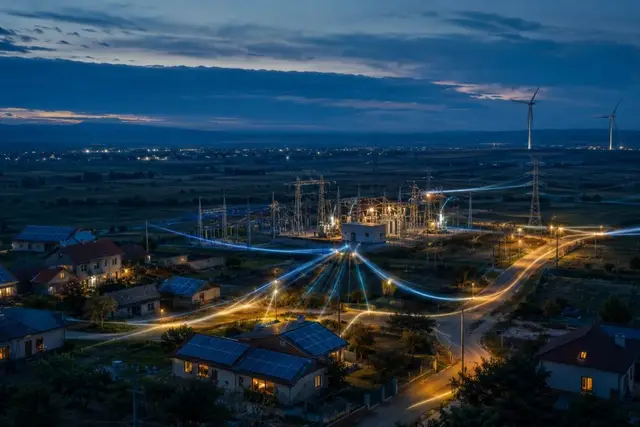
ANRE Order 9/2026 gives Romania energy communities access to wholesale and balancing markets.
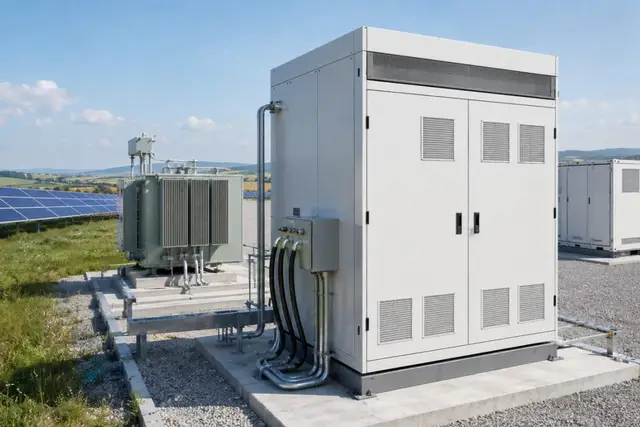
Solar și stocare: proiectele pierd finanțarea UE dacă folosesc invertoare sau PCS cu risc ridicat. Notificarea s-a închis pe 1 septembrie 2026.