
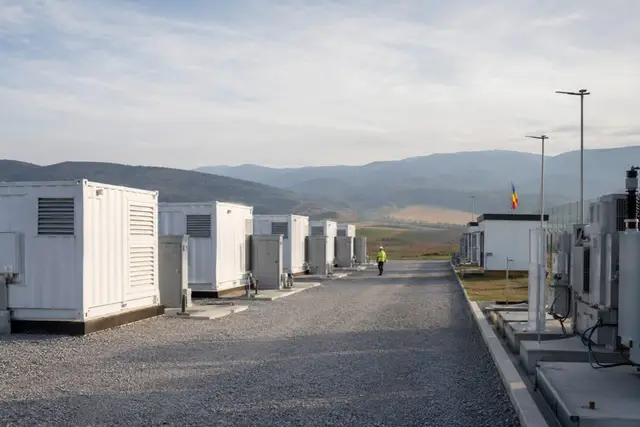
Romania Opened a EUR 150 Million Battery Window. One Number Will Set the Ranking
Romania's EUR 150 million battery storage call ranks purely on requested aid per MWh, capped at EUR 69,000.

The questions Turkish and European investors ask about Romania, answered with dated facts.
In shortRomania offers international investors EU-regulated exposure to a fast-growing renewable market with three revenue routes (15-year CfDs, corporate PPAs and merchant sales), EU Modernisation Fund support and no sector-specific foreign-ownership restrictions. The binding constraints in 2026 are grid capacity, allocated under ANRE Order 15/2026 with a EUR 20,000/MW guarantee, and delivery: EPC contractors, equipment and 2028 CfD deadlines.
Projects sourced, developed, built and operated for you in Romania, with a screening memo before each commitment and one counterpart from company set-up to the operating plant.
An EPC and O&M partner with ANRE (Romanian Energy Regulatory Authority) certifications E1, E2 and A3 for your permitted projects, and co-development from land and permits to ready-to-build.
Company set-up, project sourcing, construction and operation handled on the Romanian side, in Turkish, Romanian and English, for groups moving from Türkiye into the EU market.
A technical counterpart for plants under construction or in operation, PPA context and, soon, the sale of the electricity produced.
Most international investors follow a similar path. The order matters because grid status and revenue route decide what a project is worth before any legal work begins.
Technology (solar, wind, storage, hybrid), stage (development, ready-to-build, operating), size and revenue route (CfD, PPA, merchant). Romania rewards clarity here because the pipeline is large and uneven.
Verify the technical connection permit (ATR), the capacity allocation status under the 2026 rules and the guarantee receipts; then permits, land rights and any CfD contract terms.
Projects are typically held through a Romanian company. Line up the EPC contractor, the O&M provider, the legal and technical advisors and, where relevant, the lender early; delivery capacity is the scarce resource. Momentum Energy sets up the company and delivers EPC and O&M under its ANRE certifications E1, E2 and A3.
Model CfD strike prices with the scheme's indexation terms, PPA structures with hourly matching, or merchant exposure on hourly shapes including negative hours.
Conditions precedent should mirror the verified facts. After closing, rules, deadlines and prices keep moving; monitoring is part of ownership in Romania.
The items below are the ones that most often change the value of a Romanian renewable project. We publish them because we would rather work with investors who ask these questions.
Technical connection permit (ATR): validity, capacity, connection point, works required and who pays for them.
Capacity allocation status under Transelectrica's 2026 procedure and proof of the EUR 20,000/MW participation guarantee.
Land rights: ownership or superficies, pre-emption compliance under Law 17/2014, cadastral status, access and easements.
Permits: urbanism certificate, environmental decision, building permit, ANRE licence status and remaining validity.
Revenue route: CfD contract terms (strike price, indexation, 36-month COD clock, guarantees), PPA terms (profile, matching, credit) or merchant assumptions.
EPC and equipment: contractor track record in Romania, equipment lead times, inverter cybersecurity compliance for EU-funded projects, commissioning documentation capacity.
Grants: Modernisation Fund or other public funding, obligations attached and clawback risk.
Counterparties: developer track record, encumbrances, pending litigation, related-party arrangements.
System context: curtailment exposure in the project area, export capacity, storage options.
About 20,000 Turkish-capital companies operate in Romania and Turkish groups have moved from buying solar projects to building them. Read how the corridor works and how Turkish groups have entered.
Because the market combines EU regulation, a 15-year CfD scheme financed with EUR 3 billion from the Modernisation Fund, strong solar and wind resources, rising electricity demand and a grid operator that connected 2,514 MW in the first eight months of 2026. Renewables covered 25.4% of gross final energy consumption in 2024, so the transition still has a long way to run.
Grid capacity and delivery. Since May 2026, capacity is allocated through Transelectrica procedures with a EUR 20,000/MW guarantee, and most CfD-awarded projects must reach commercial operation by 2028, which concentrates demand for EPC contractors and equipment. Price shape risk (negative midday hours) and regulatory change are the other two items we monitor continuously.
Projects are usually owned through a Romanian company and there are no sector-specific foreign ownership restrictions for generation assets. Agricultural land transactions follow the pre-emption procedure of Law 17/2014; many projects use long-term land rights rather than purchase.
They are 15-year two-way contracts awarded by the Ministry of Energy through competitive auctions. Round-2 (August 2025) solar averaged EUR 40.46/MWh and wind EUR 73.8/MWh; winners must reach commercial operation within 36 months. Storage is not covered.
Yes. A EUR 150 million Modernisation Fund call for standalone batteries is open from 1 September to 30 October 2026, with aid capped at EUR 69,000 per MWh and EUR 15 million per company.
Yes, and they are the main hedge outside the CfD scheme. Buyers increasingly ask for hourly matching evidence as CBAM reporting matures, and guarantees of origin underpin green supply claims.
It depends on the connection point, the works required and the outcome of the capacity allocation procedure. Since June 2026, allocation is area-based and competitive; projects in areas with transmission headroom carry less delay risk.
It is the open question of 2026-2028. Roughly 4.2 GW of awarded projects share similar delivery deadlines, and the shortage of internationally experienced EPC contractors is a recurring theme in lender and industry commentary. Projects with an experienced contractor under contract carry materially less delivery risk. Momentum Energy delivers EPC under its own ANRE certifications E1, E2 and A3 and can take a project from ready-to-build through commissioning and into operation.
The EBRD and the EIB are active, and the EBRD financed the first large merchant standalone battery in 2026, alongside Romanian and international commercial banks. The individual financings, with the banks involved, are covered in our analyses.
It varies with the vehicle and the project stage. Setting up a Romanian company is a matter of weeks; the timeline of a project is set by its grid and permitting status, which is why we verify those first.
Romania offers EU-regulated, euro-denominated revenue routes (CfD, PPA, merchant), EU funding and access to the EU internal market, with a different permitting, grid and land framework. Our Türkiye-Romania page sets out the comparison and how Turkish groups have made the move.
Romania's EUR 150 million battery storage call ranks purely on requested aid per MWh, capped at EUR 69,000.

Romania’s solar market beat every forecast. Here are three trends investors should watch during the second half of 2026.
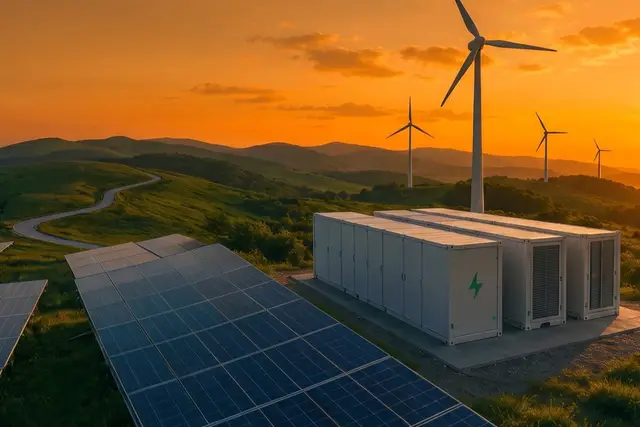
Romania secured €636.9 million from the EU Modernisation Fund, all earmarked for standalone battery. What it means for storage developers?