220 MW Solar, 110 MW Storage: Eurowind's Largest Project Shows Where Romania's 2027 Build Is Heading
Eurowind's 220 MW solar and 110 MW storage hybrid at Vișina shows where Romania's 2027 build is heading and where the new bottlenecks sit.
Romania solar and storage 2027: what Eurowind’s Vișina hybrid project tells EPC contractors, battery integrators, lenders and investors about the next build cycle.
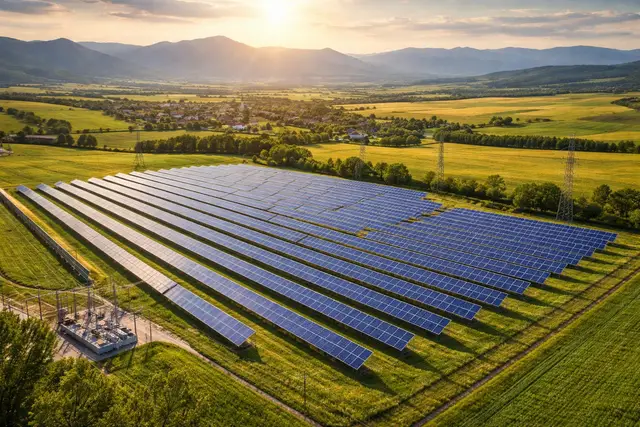
In June 2025, Eurowind Energy announced a 220 MW solar park at Vișina, in Dâmbovița county. Storage sat at the edge of that announcement, described as something the company might add later if the grid needed it.
In September 2026, the same project is heading into construction as 220 MW of solar plus 110 MW of battery storage. Country Manager Adrian Dobre describes it as the largest project in the Eurowind group worldwide, not just in Romania.
Fifteen months, one design change. That change is the more useful story.
Last month we looked at Eurowind starting three Romanian wind farms at once and argued that 2027 will be a turbine-logistics market. Vișina is the solar side of the same programme, and it points to a different constraint. Romania no longer struggles to build solar parks. It installed about 2.2 GW of solar in 2025 and connected another 1,331 MW of photovoltaic capacity between January and August 2026. The harder question for 2027 is what happens after the panels go in: how the power is shifted, sold and kept available once almost every large site carries a battery next to it.
The project in numbers
- Capacity: 220 MW of solar and 110 MW of battery storage. The storage duration, and therefore the MWh figure, has not been published.
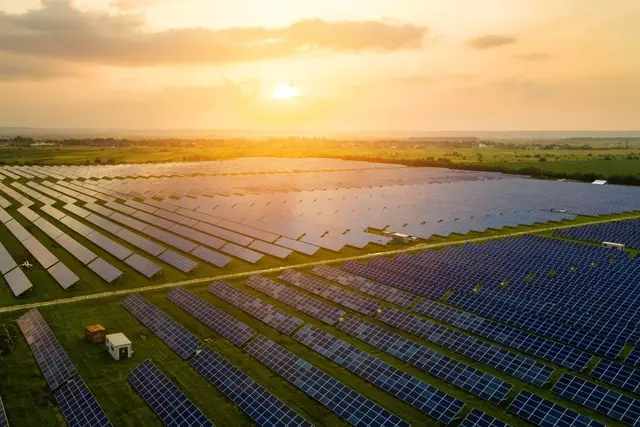
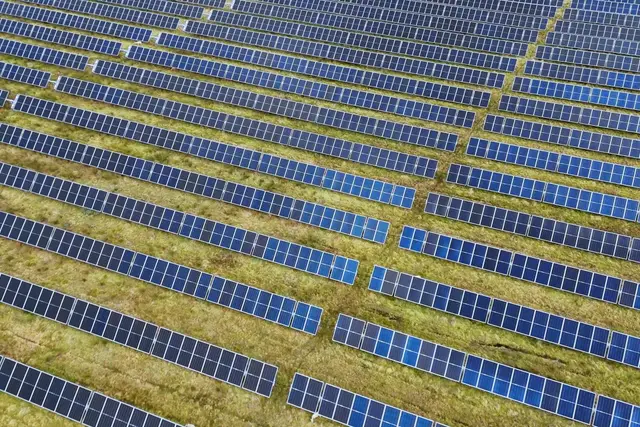
- Site: 354 hectares in Vișina, Dâmbovița county, with more than 400,000 photovoltaic modules.
- Output: about 400 GWh a year, which Eurowind equates to the consumption of roughly 150,000 households.
- Investment: EUR 174.8 million, the figure given when the project was announced as solar only.
- Local works: modernisation of a 7.5 km agricultural access road that stays open to the public.
- Timing: construction starting within weeks, with operation targeted for 2027.
Around it sits a Romanian portfolio of about 184 MW in operation across wind, solar and storage, 138 MW of wind under construction, a target of roughly 700 MW operating by 2027 and 1 GW over the longer term. Joachim Steenstrup, Eurowind’s Global Head of External Affairs and Strategy, has placed Romania among the group’s four core markets alongside Denmark, Germany and Poland, with EUR 300 to 400 million a year earmarked for the country through 2030, about EUR 1 billion in total.
One detail for anyone modelling the project: the EUR 174.8 million figure predates the battery. It is safer to read it as a floor for the hybrid than as the final capex.
Eurowind has already run this experiment once
Vișina is not Eurowind’s first hybrid in Romania. At Teiuș, in Alba county, the company commissioned a 60 MW solar park in April 2025 and then added a 120 MWh lithium iron phosphate battery beside it, a EUR 21 million investment supported through the PNRR. The EUR 16.6 million EPC contract covered design, procurement, construction, SCADA, DMS and EMS integration, testing and commercial authorisation.
Teiuș was a retrofit: build the solar park first, then add storage. Vișina is designed as a hybrid before the first pile is driven. That shift, from retrofitting batteries to designing them in from day one, is the pattern worth watching, because the rest of the Romanian market is making it at the same time.
Romania’s 2027 hybrid queue
Count what else is scheduled to energise in the same window.
- Enery is building its Ogrezeni project in Giurgiu county: 534 MW AC of solar, about 750 MW DC, with more than 1 GWh of storage, over EUR 460 million of investment and commissioning targeted for summer 2027.
- Econergy has signed a EUR 229 million, six-lender package for Părău 2 in Brașov county: 342 MWp of solar and 150 MW of storage, with 125 MW AC holding a 15-year CfD at EUR 49.4/MWh and commercial operation expected in late 2027 or early 2028. Nearby, the IS Părău storage facility, 76.76 MW and 150.288 MWh, was connected to the grid in August 2026.
- OMV Petrom and Complexul Energetic Oltenia are building four solar parks in Oltenia, about 550 MW in total, for 2027: around 800,000 panels, roughly 1,500 truck deliveries and more than EUR 400 million of investment, about 70 percent financed through the Modernisation Fund. In September, OMV Petrom also signed an EPC contract for a 20 MW / 40 MWh battery at its Ișalnița solar park.
- Nofar Energy brought 315 MWp online in Giurgiu county in September 2026, including Iepurești, now the largest operating solar park in Romania, and is planning a 280 MW / 860 MWh storage system on the same site.
Add Vișina, and the visible queue carries roughly 1.9 GW of new solar capacity (reported in a mix of AC and DC) and more than 1.9 GWh of disclosed storage planned or under construction, before counting the MWh at Vișina and Părău 2, which have not been published. On panel count alone, the four Oltenia parks and Vișina need about 1.2 million modules between them. Scaled across the rest of the queue, our estimate is that Romanian utility-scale solar construction in 2027 will handle around three million modules.
The grid auction points the same way. Of the 12 projects and 491 MW entered in Transelectrica’s first connection capacity auction, with bidding from 30 October 2026, most are hybrids or storage, including two Romgaz solar parks with integrated storage and a 100 MW standalone battery at Iernut. Standalone solar is becoming the exception.
Then look at the ratios. Teiuș pairs 120 MWh of one-hour storage with 60 MW of solar. Vișina pairs 110 MW of storage with 220 MW of solar. Părău 2 pairs 150 MW with 342 MWp. Ogrezeni puts more than 1 GWh behind 534 MW AC. There is no standard Romanian hybrid yet. Each developer is betting on a different revenue stack, and from 2027 those bets will be tested against each other in the same market.
Where the bottleneck moves
Wind in 2027 is constrained by roads, cranes and blade transport. Solar in 2027 is constrained somewhere less visible.
- Power electronics and high-voltage equipment. A hybrid site needs PV inverters, battery power conversion systems, transformers and substation equipment to arrive on time and work together. On a site with 400,000 modules, the energisation date is set by the high-voltage side, not by the panels.
- Integration. At Teiuș, SCADA, DMS and EMS integration was written into the EPC scope. On a hybrid, the energy management system decides when the battery charges from the solar park, when it charges from the grid and when it sells. Whoever owns that interface owns a large share of the project’s revenue.
- Connection. Transelectrica’s queue holds 1,530 renewable projects with 91,118 MW of approved capacity. For comparison, national consumption peaked at 7,274 MW on 3 August 2026.
- Commissioning. Transelectrica expects about 2,000 MW more to connect before the end of 2026, around half of it storage. Every one of those assets needs testing, qualification and commercial authorisation in the same few months.
Why this is a cycle and not a spike
Two structural changes make 2027 the start of a hybrid build cycle rather than a one-off.
First, prices. Romania’s second CfD round awarded about 1.4 GW of solar at an average strike price of EUR 40.46/MWh. When solar is contracted that cheaply and midday wholesale prices keep sliding, value moves to the evening. Romania’s average daily price spread was about EUR 168/MWh in 2025. A battery on the same site, behind the same connection, is the cheapest way to capture it.
Second, capital. Private developers, commercial lenders, the Modernisation Fund and the PNRR are all financing hybrids. Econergy has six lenders on one project. OMV Petrom and CE Oltenia have Modernisation Fund money behind their parks. Eurowind has committed about EUR 1 billion to Romania through 2030. The Romanian Photovoltaic Industry Association describes a market moving away from subsidy reliance toward merchant structures, which is exactly where on-site storage earns its place.
The case against, stated plainly
Romania’s hybrid wave carries real risks, and this article would be worth less if it skipped them.
Battery revenues are about to be shared. Installed storage stood at 989 MW and 1,975 MWh on 1 August 2026. ANRE (Romanian Energy Regulatory Authority) vice-president Gabriel Andronache expects around 2,000 MW and 4,000 MWh by the end of the year, and ANRE counts a pipeline of 9,147 MW across 143 projects. Romania ranks fourth in Europe for battery revenue potential in ENTSO-E analysis, but that ranking reflects today’s scarcity, and scarcity is what the pipeline removes. Short-duration batteries built mainly for balancing services are the most exposed.
Duration is still an open question at Vișina. A 110 MW battery with one hour of storage and one with two or four hours are different businesses with different risks. Until the MWh figure is public, the revenue case cannot be read from the outside.
Large sites are hard to repeat. At 354 hectares, Vișina is far beyond the 50-hectare per-project ceiling that applies when renewables are built on extravilan agricultural land of quality classes III to V. Projects of this size need a heavier land-use route, and suitable sites are finite.
And the connection queue is not a construction queue. 91 GW of approved capacity against a national peak of about 7.3 GW means most of what is queued will never be built. Projects already moving to construction in 2026, like Vișina, hold a real advantage over those still competing for capacity.
Momentum Energy’s View
Most coverage of Romania’s hybrids stops at the headline MW. For owners, the numbers that matter come later, and they are set earlier.
A hybrid site is two assets with different lives under one connection. Solar modules degrade slowly and predictably over 30 years or more. Batteries degrade with every cycle, and the pace depends on how hard they are dispatched. The trading strategy that maximises revenue in 2028 can consume the battery warranty by 2032. That trade-off is decided in the EMS logic and the warranty terms before commissioning, not after.
There is a second effect the market has not priced. As storage arrives on almost every large site, availability becomes a hybrid-level number. If the battery is offline during the evening peak, the value of the solar park falls with it. O&M contracts that treat the panels and the battery as separate scopes, with separate response times and separate availability definitions, will leave owners arguing about which contractor lost the revenue.
Momentum Energy builds and operates solar plants in Romania under ANRE certifications E1, E2 and A3: we deliver turnkey EPC projects and O&M services, and we are the EPC contractor for a 79 MWp solar park in Alba County, the same county as Eurowind’s Teiuș hybrid. That experience leads to one conclusion, which Romania’s 2027 queue is about to test at scale: the decisions that set an asset’s lifetime yield are made before construction starts.
Our practical view for hybrids in 2027 is short. Fix storage duration, cycle budget and dispatch rights before the battery is ordered. Give one party responsibility for the interface between PV inverters, battery conversion and the EMS. And write O&M around the site, not around the equipment, with availability defined for the hybrid as a whole.
Romania has the solar resource, a working CfD framework, a dated grid allocation process from 2026 and serious private capital coming in. The question for 2027 is no longer whether the hybrids get built. It is whether they are built to run well for the next 25 years.
What to check before Q1 2027
- Storage duration, cycle budget and warranty terms aligned before battery procurement.
- A single accountable party for PV inverters, battery power conversion, SCADA and EMS integration.
- Delivery slots for transformers and high-voltage equipment matched to a 2027 energisation date.
- Connection milestones checked against Transelectrica’s allocation calendar and the October capacity auction results.
- Revenue cases stress-tested for about 2 GW / 4 GWh of batteries online by end-2026, not the 1 GW of today.
- O&M scope and availability definitions written at site level, covering solar and storage together.
Sources and references
Organisations and documents cited in this article.