€411/MWh on the Spot Market, Zero Grid Capacity Before 2032: Two Numbers Romanian Renewable Investors Should Read Together
Romania hit €411/MWh on 10 November while the first grid auction offered nothing before 2032. Why the connection date should anchor every valuation.
Romania’s power price touched one of Europe’s highest levels on 10 November, while Transelectrica’s first grid capacity auction offered nothing before 2032. Here is why the connection date, not today’s price, should anchor every project valuation, and what an oversubscribed €150 million battery call means for deal flow.
On 10 November, the average price on Romania’s day-ahead market (PZU) reached 2,191 lei/MWh, about €411/MWh, again among the highest in Europe. In the same fortnight, Transelectrica ran Romania’s first grid capacity auctions, from 30 October to 12 November. They offered 1,566 MW of future connection capacity, all of it between 2032 and 2037.
Read together, the two numbers explain a lot about the Romanian market right now. In September we looked at how the auction and the €150 million battery call would work. This is what they produced, and what it means for anyone buying or building projects.
Today’s price is a data point, not a forecast
- 9 November: about €388/MWh. 10 November: about €411/MWh. 11 November: €352.56/MWh.
- Week of 2 to 8 November: an average of €293.33/MWh, the highest among the core Southeast European markets, with Romania’s net imports up 24% on the previous week.
- Delivery on 13 November: 1,065.59 lei/MWh baseload, roughly €200/MWh, about half the 10 November level.
- Monthly PZU averages: 917.36 lei/MWh in September and 1,265.96 lei/MWh in October 2026, around €175 and €240/MWh.
Nuclear outages have increased Romania’s need for imported electricity this autumn. Day-ahead prices have also swung from about minus €98/MWh to close to €1,000/MWh in individual episodes. Prices like these make renewable generation and battery storage look very attractive on paper. They say much less about the market a project will sell into when it is finally connected.
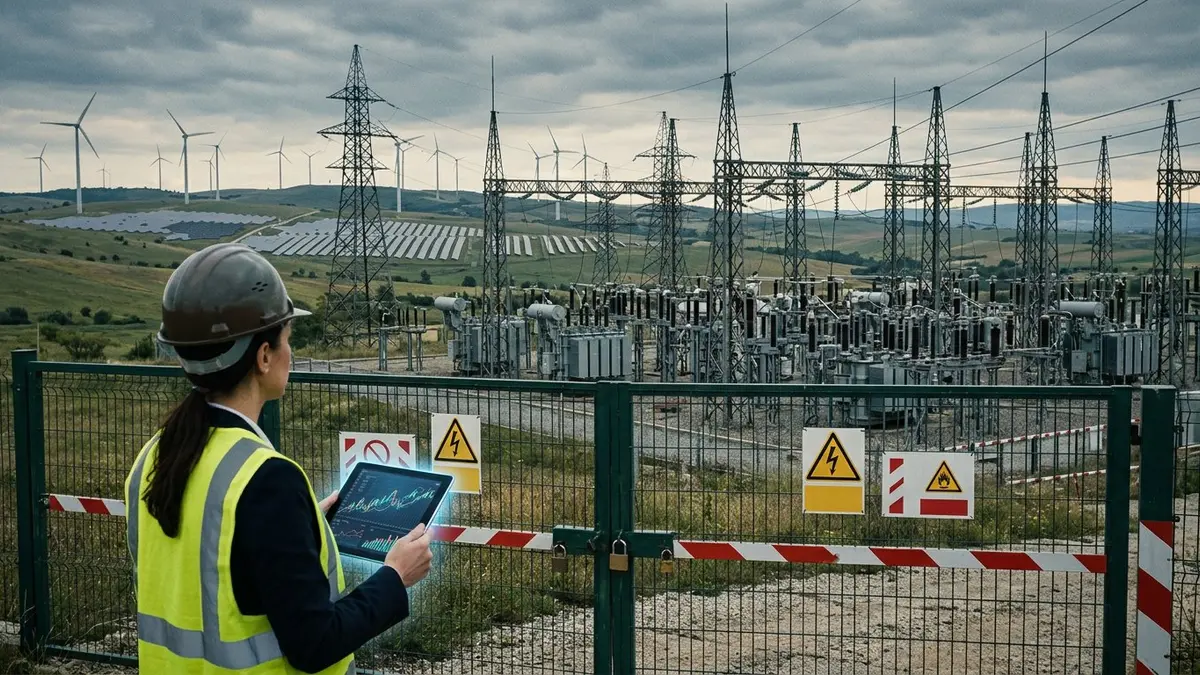
The grid: capacity exists, but not before 2032
- Capacity offered for 2028 to 2031: zero MW in all ten grid zones.
- 2032: 412 MW (zones H and I). 2035: 80 MW (zone E). 2036: 862 MW (zones B and D). 2037: 212 MW (zones A, D and J).
- Starting prices: 724,569 to 3,843,000 lei/MW, about €136,000 to €719,000/MW at the National Bank of Romania rate of 10 November.
- These are starting prices only. Winning bids can be higher, and the cost of the connection works comes on top.
- The participation guarantee was €20,000/MW. Results had not been published at the time of writing.
A simple example shows the scale. For a 50 MW project, the starting prices alone mean roughly €6.8 million to €36 million before any cable is laid. A two-hour battery currently costs about €130,000 to €150,000 per MWh to build, so a 50 MW / 100 MWh system costs around €13 to €15 million. In the most expensive zones, the right to connect can cost more than the asset itself.
The auction does not close every route. Transelectrica’s figures cover only capacity allocated through the new mechanism, and they do not mean that every new connection before 2032 is impossible. Projects that already hold valid connection rights are the obvious exception, which is why they are now priced as scarce assets.
Batteries: the market you model is not the market you will operate in
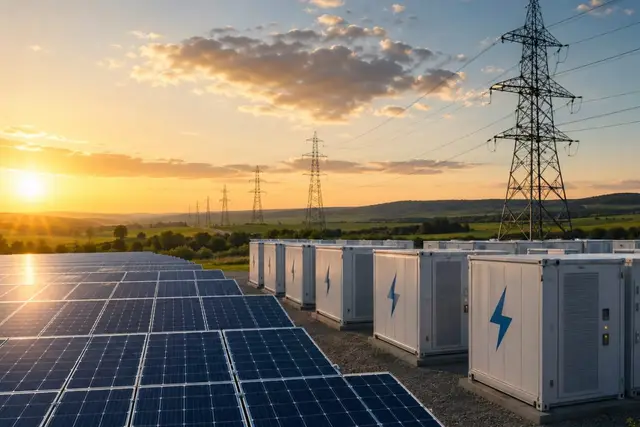
- Installed battery capacity: 989 MW on 1 August (ANRE) and about 1,000 MW at the end of October.
- Expected in 2027: about 2,000 MW, mostly two-hour systems, above the 2030 target of 1,200 MW plus 800 MW at Tarnița.
- Pipeline: 822 storage projects with valid connection approvals (ATR) totalling 65.3 GW. About 25 GW had connection contracts, 12.15 GW building permits and only 3.38 GW an ANRE establishment authorisation (data at 1 August).
- Revenue volatility: Clean Horizon estimates that revenues for two-hour and four-hour batteries in Romania fell by around 35% in August compared with July, as aFRR energy spreads narrowed.
A battery commissioned in 2029 will not trade in November 2026’s market. It will share the same balancing and arbitrage opportunities with a fleet at least twice today’s size, and possibly much larger. Nicolas Pleșea of Adrem Asset Management notes that in this early phase the high revenues are earned by the marginal megawatt, and that they can halve within a month.
The €150 million battery call: oversubscribed, and a likely source of sellers
- The Ministry of Energy extended the deadline of its Modernisation Fund call for standalone batteries from 30 October to 15 November 2026.
- By 6 November, 66 applications had been submitted and 241 more were in draft, requesting 10.57 billion lei, 13.4 times the budget.
- Aid is capped at €69,000/MWh and €15 million per company, projects are ranked by the lowest aid requested per MWh, and the call targets at least 2,174 MWh.
- Consultants expect winning bids of €5,000 to €15,000/MWh for large projects, well below the cap.
With requests at 13.4 times the budget, many applicants will miss out. Some will be able to show that their projects work without a grant. Others will look for new equity partners or buyers in the coming months, which could create interesting acquisition opportunities for investors who can price grid and revenue risk properly.
Momentum Energy’s View
Romania remains one of the most attractive renewable energy markets in Europe. Resources are strong, international financing is available and the development pipeline is deep. But in our work evaluating Romanian projects, we have seen apparently affordable projects become expensive once grid connection costs, required upgrades and the real construction timeline were priced in. For investors looking at Romanian projects now, our checklist is short:
- Start with the grid connection, not the asking price. When can the project export, at what cost, and on the basis of which document?
- Price every euro remaining before COD. Connection fees, grid reinforcement, guarantees and construction, not only the purchase price.
- Check what is actually secured. The gap between 65.3 GW of ATRs and 3.38 GW of ANRE authorisations shows how far a permit can be from a buildable project.
- Test revenues against the market at commissioning. €411/MWh on one day and about €200/MWh three days later is not a basis for a 15-year model.
- Be especially careful with BESS forecasts built on today’s balancing market. Around 2 GW of batteries are expected by 2027.
We would rather back a smaller project that can actually be built than pay for impressive MW figures with years of uncertainty attached. In Romanian renewables, the most expensive part of a project is often the time lost before it generates its first MWh. No investor gets that time back.
Sources and references
Organisations and documents cited in this article.
- Economica.net, 'Prețurile cresc iarăși pe piețele de energie din Europa. România are azi un preț spot de 411 euro/MWh', 10 November 2026
- Energynomics, 'A project with grid connection rights is more than a development project, it's a rare asset', November 2026
- Serbia Energy, 'Romania puts grid connection rights up for auction as scarcity reshapes electricity investment economics', October 2026
- Financiarul.ro, 'Prețul mediu al energiei pe piață a fost 352,56 euro/MWh pentru 11 noiembrie', 11 November 2026
- Serbia Energy, 'SEE electricity markets: prices, demand and cross-border trading', 12 November 2026
- OPCOM, Day-ahead market (PZU) results and monthly weighted average prices, accessed 12 November 2026
- Serbia Energy, 'Romania nuclear availability and grid scarcity shape regional power costs', 6 November 2026
- National Bank of Romania reference rate for 10 November 2026, 1 EUR = 5.3443 lei (via curs-valutar-bnr.ro)
- Ziare.com, 'Transelectrica a început licitația pentru racordarea la rețeaua electrică a proiectelor energetice: 20.000 euro/MW este garanția de participare', 2 July 2026
- Energynomics, 'Stand-alone batteries: grant offers could fall to 5,000 euros/MWh, with serious risks', 9 November 2026
- StartupCafe.ro, 'Pe hârtie, România are proiecte de baterii de 65 GW. În realitate are circa 1 GW', 22 September 2026 (ANRE data at 1 August 2026)
- ACTmedia, 'Busoi: Romania could reach 2,000 MW of installed battery storage capacity next year', 29 October 2026
- Clean Horizon, 'Storage Index: August 2026 is out!', 2026
- Energynomics, 'Nicolas Pleșea, Adrem: Tolling turns battery volatility into bankable cash flows', 8 October 2026
- Balkan Green Energy News, 'Romania allocates EUR 250 million in grants for batteries, smart meters', July 2026
- RCG Consulting, 'Stocare stand-alone: 150 milioane €, alocate celor mai mici oferte pe MWh', 2026
- ANRE (Romanian Energy Regulatory Authority)
- Transelectrica (transmission system operator)
- Romanian Ministry of Energy
- EU Modernisation Fund (European Commission, Climate Action)
- National Bank of Romania (BNR)