Electromontaj and Vodafone Will Turn Alba Iulia Into Romania's First Digital Substation in a €90 Million Transelectrica Deal
Transelectrica awarded Vodafone Romania and Electromontaj a 476 million lei contract to turn Alba Iulia into Romania's first digital substation by 2030.
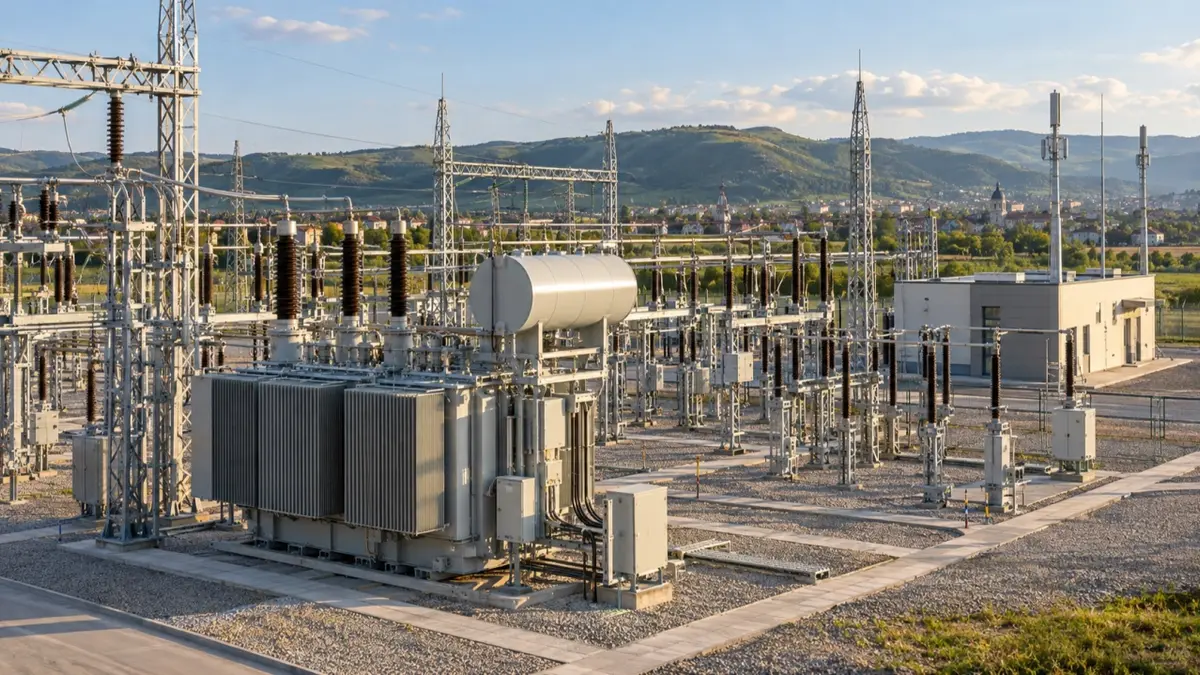
Romania’s transmission system operator has just put 476 million lei behind a question the whole energy sector keeps asking: can a high-voltage substation be run like a data platform? On 30 September 2026, Transelectrica launched the retrofit of its 220/110/20 kV Alba Iulia substation into the country’s first fully digital station, awarded to an association of Vodafone Romania and Electromontaj. The pilot runs for 44 months and is scheduled to finish in May 2030.
The deal in numbers
- Contract value: 476.07 million lei excluding VAT, about €90.4 million at Transelectrica’s own conversion (some outlets quote €92 million).
- EU money: 228.47 million lei, close to half the contract, comes as non-reimbursable funding from the Modernisation Fund.
- Timeline: 44 months of design and execution, completion targeted for May 2030.
- Reach: IT&C components extend beyond Alba Iulia to 21 other transmission substations, two Hidroelectrica sites, four Distribuție Energie Electrică Romania (DEER) stations and five Transelectrica operational centres.
Who does what
This is the detail that makes the contract unusual. It is not an EPC job with a telecom add-on. The association is led by Vodafone Romania, with Electromontaj as co-contractor.
- Vodafone Romania brings the telecommunications layer and the private cloud that the substation’s data will live on.
- Electromontaj (Grup EM, listed on the Bucharest Stock Exchange as EM) carries the physical retrofit: construction and installation of electrical equipment, command-control and monitoring systems, a Building Management System, a passive smart building, a photovoltaic plant, e-mobility infrastructure and the Digital Laboratory.
- Subcontractors include TIAB, Siemens Energy, Arctic Stream, EMFOR, Binbox Global Services, Maguay Computers, Eximprod Engineering and INTECH Solutions.
- POLITEHNICA Bucharest partners on the Digital Laboratory, where equipment and cybersecurity measures are tested before they touch critical infrastructure.
On top of automation, the scope includes a Digital Twin with augmented reality, a satellite-fed GIS, an Asset Health Center for condition monitoring, integrated cybersecurity and a training platform for grid specialists.
“Today we witness the first proof that it can be done. The next 44 months follow to provide evidence that it works.” Ștefăniță Munteanu, CEO, Transelectrica
“Modernising the energy sector is not only about building new capacity. It also means rethinking how we use existing infrastructure and the data it generates.” Ionuț Tănăsoaica, CEO, Electromontaj
Why a telecom operator is bidding on a substation
A digital substation replaces kilometres of copper control wiring with fibre and networked protection, control and metering. Once that happens, the hard problems shift from steel and concrete to latency, data storage and cyber defence. That is telecom and cloud territory. The Alba Iulia consortium is a template: expect future Transelectrica tenders to reward bidders that pair an electrical EPC with a network operator or IT integrator, rather than one or the other.
What it means for renewable developers
Romania’s connection queue is the single biggest bottleneck for solar, wind and battery projects. Digital substations do not add transformer capacity by themselves, but real-time asset health data and faster fault isolation let an operator run existing equipment closer to its true limits and plan reinforcements with better evidence. For developers, the practical takeaway is simple: grid data quality in the Transylvanian node around Alba Iulia should improve from 2030, and the same model is meant to be rolled out across the wider network.
Momentum Energy’s View
We read this contract as a signal about how Romania will spend its Modernisation Fund money after the PNRR closed: on grid intelligence, not only on new megawatts. Three points matter for investors and contractors:
- Consortium design is now a competitive edge. EPCs without a credible telecom or cloud partner will find digital grid tenders harder to win.
- The 44-month timeline is the real test. Transelectrica’s own CEO framed this as proof of concept. Delivery on schedule would de-risk a national rollout; slippage would slow it.
- Supply chain opportunity is broad. Protection relays, fibre, cybersecurity, sensors, GIS and training all sit inside one contract, which opens doors for specialist suppliers who partner early with the main contractors.
If Alba Iulia works, it becomes the reference design for the substations that every new solar park and BESS project in Romania will eventually connect to.
Sources and references
Organisations and documents cited in this article.