Romania Added Record Solar Capacity in 2025, So What’s the Next Bottleneck?
Rapid growth across utility-scale and distributed solar capacity. Grid infrastructure and system integration becoming the next big challenge.
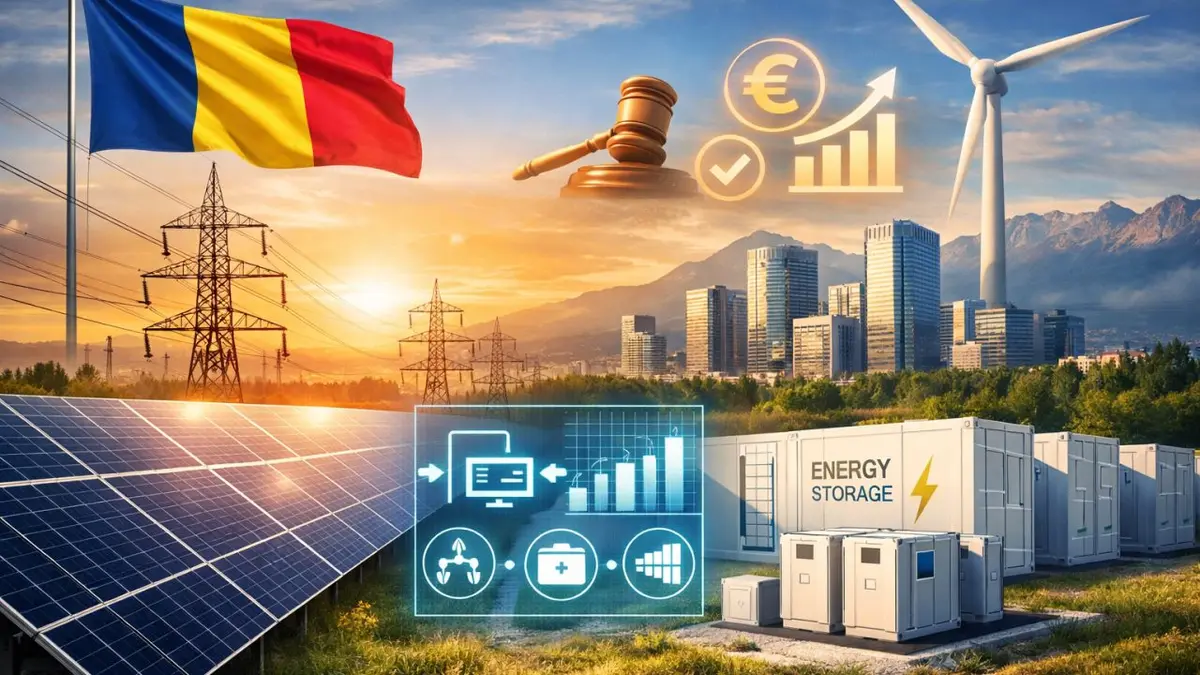
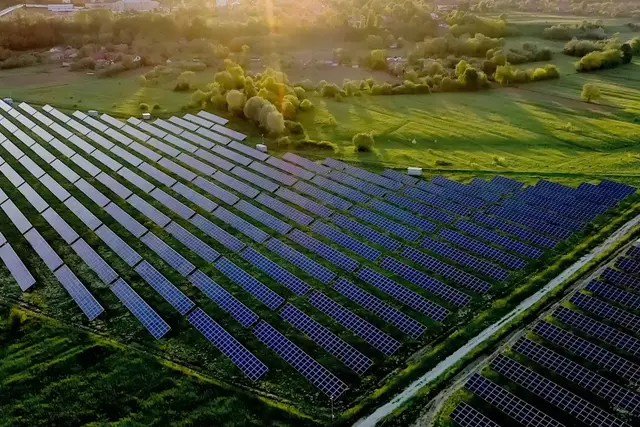
Romania’s solar market hit a major milestone in 2025. Installed photovoltaic capacity moved past 7 GW, powered by strong investor appetite, EU decarbonisation momentum, and rapid buildout across both utility-scale and distributed segments.
For developers, investors, and EPC companies, the message is clear: Romania has entered a durable solar scale-up phase and it’s doing so with increasing policy maturity, including bankable support mechanisms like Contracts for Difference (CfDs).
As the market moves from fast growth to mass deployment, a new question is emerging:
If solar capacity is growing this quickly, what becomes the next constraint?
Spend time with developers, grid operators, lenders, or offtakers and a common theme appears: the challenge is no longer proving solar economics. The challenge is integrating that scale into the system reliably, predictably, and at pace.
1) The grid is becoming the key gating factor
Romania’s solar growth is now running into the realities of network readiness. Like many European markets, Romania faces the need to modernise and expand grid infrastructure to meet rising demand and connect new generation. The European Investment Bank has explicitly described Romania’s electricity network as being in urgent need of investment to address aging infrastructure and growing demand.
Romania’s own policy research community also frames grid buildout as a decisive enabler of the transition, estimating multi-billion-euro investment needs for both transmission and distribution.
In practice, developers are increasingly encountering:
- fewer “easy” connection points
- congestion on key corridors
- longer timelines and higher uncertainty on grid access The constraint is shifting from “can we develop projects?” to “can we connect and operate them predictably?”
2) Connection queues are growing faster than the grid and the rules are changing
Romania’s renewable pipeline is large, and grid access has become sufficiently scarce that policymakers are redesigning allocation.
From January 2026, new generation and storage projects ≥5 MW will be required to secure capacity through auction-based allocation, aiming to reduce speculative reservations and improve transparency and planning.
This matters for investors because it signals a more “industrial” market structure: grid capacity becomes a priced and planned resource, not just a checkbox. For serious developers, that’s a positive evolution because predictability is bankability.
3) Flexibility and storage are becoming essential
As solar penetration increases, system flexibility becomes as important as installed megawatts. Romania’s policy debate is increasingly oriented toward:
- battery energy storage systems (BESS)
- hybrid solar + storage
- balancing and ancillary services readiness Romanian government statements and sector reporting have highlighted multi-GW storage ambitions by 2025-2026, reflecting the practical need to firm renewables and manage peaks.
In other words: the market is evolving from “PV buildout” to “PV + integration infrastructure.”
4) Permitting and delivery timelines still matter but the direction of travel is improving
Large solar parks still require coordination across environmental, land-use, construction, and grid approvals. That said, the growth in delivered capacity and the scaling of utility projects suggest Romania is increasingly capable of executing especially when projects are structured with grid realism and strong local delivery capability.
5) The opportunity remains enormous execution will define winners
Romania’s growth story is not slowing; it is maturing.
Key drivers remain supportive:
- EU decarbonisation trajectory and funding tools
- increasingly bankable policy instruments (including CfDs; Romania awarded 1,488 MW of solar across 26 projects in a major auction round)
- a fast-expanding base of distributed solar/prosumers alongside utility scale
- rising corporate interest in long-term renewable supply structures The market’s next phase will reward projects designed around grid access, curtailment risk, balancing needs, and delivery discipline, not just land pipelines.
What this means for solar developers
In Romania’s solar scale-up phase, the strongest projects will typically prioritise:
- grid-first site selection (capacity and timeline realism)
- auction-aware grid strategy for ≥5 MW projects from 2026
- hybridisation with storage where it improves dispatchability and value
- bankable structuring aligned with CfD/PPA realities and operational licensing workflows Solar capacity alone is no longer the challenge. System integration is.
Momentum Group’s view
At Momentum Group, we see Romania as one of the most promising renewable growth markets in Central and Eastern Europe precisely because the market is evolving into a more investable, infrastructure-led phase.
Romania is moving beyond “project pipeline optimism” toward grid-aware design, bankable frameworks (including CfDs), and a clearer focus on flexibility and storage.
We believe the next generation of successful projects will be those that combine:
- strong engineering and EPC execution
- a credible grid connectivity strategy (including the 2026 auction reality for large projects)
- financeable, transparent project structures
- flexibility solutions such as storage where they improve system value Romania’s solar boom is real. The next challenge and opportunity is ensuring the grid, market design, and integration infrastructure evolve fast enough to keep pace.
Sources and references
Organisations and documents cited in this article.